



The Copper Extension
This remarkable house, with origins in the 17th century, bears the rich legacy of its many evolutions. Extended in the 18th, early 19th, mid-19th, and late 19th centuries, each addition reflects the architectural language of its time, resulting in a compelling blend of Georgian, Victorian, and Edwardian styles.
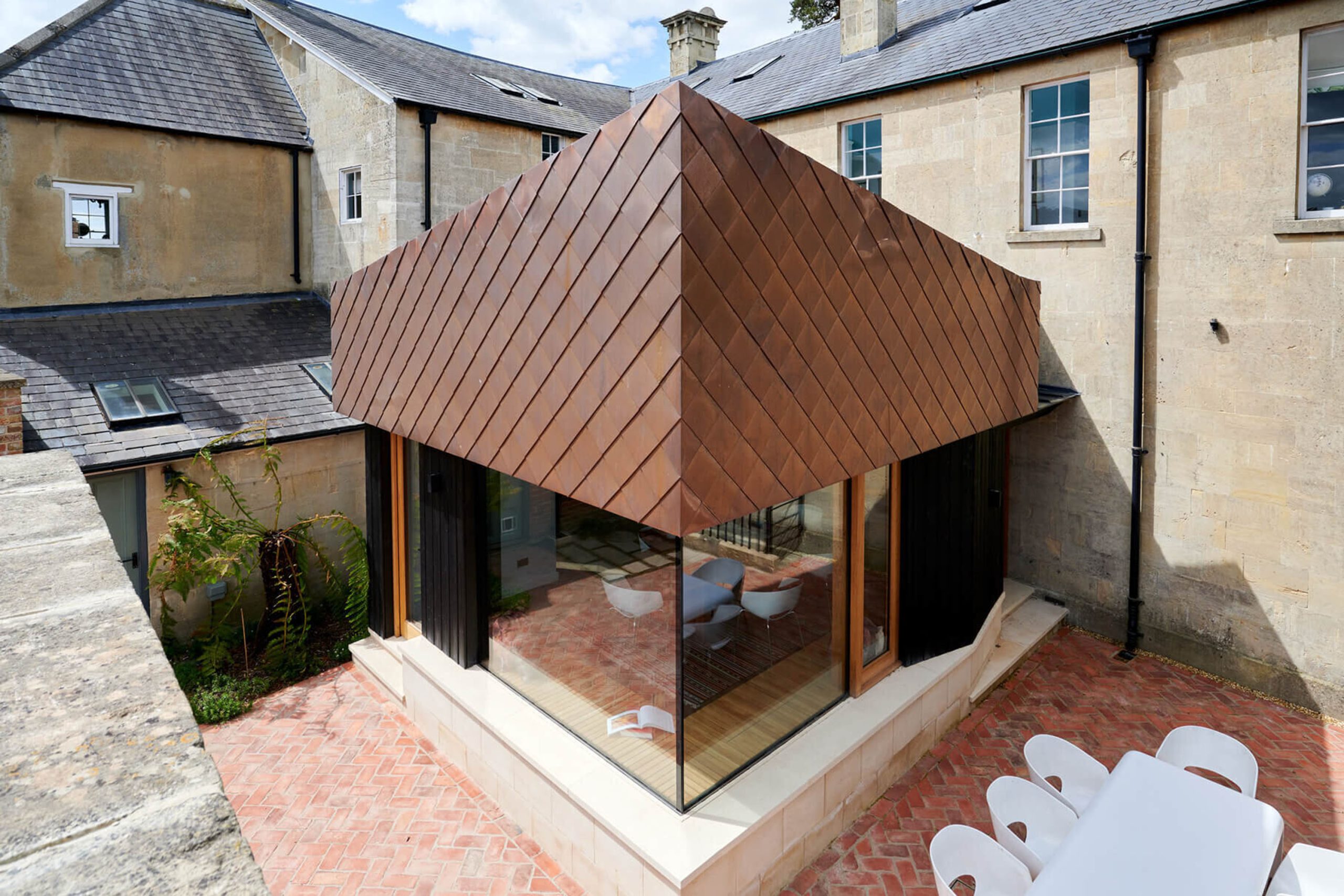
When the new owners envisioned a kitchen extension, they sought to create something unapologetically modern, yet deeply respectful of the home’s historical grandeur. The result is a bold and confident design: a contemporary box clad in copper shingles over charred timber (a timeless nod to Japanese craftsmanship) resting on a stonework plinth. This is no Victorian imitation; it is an architectural statement of the present.
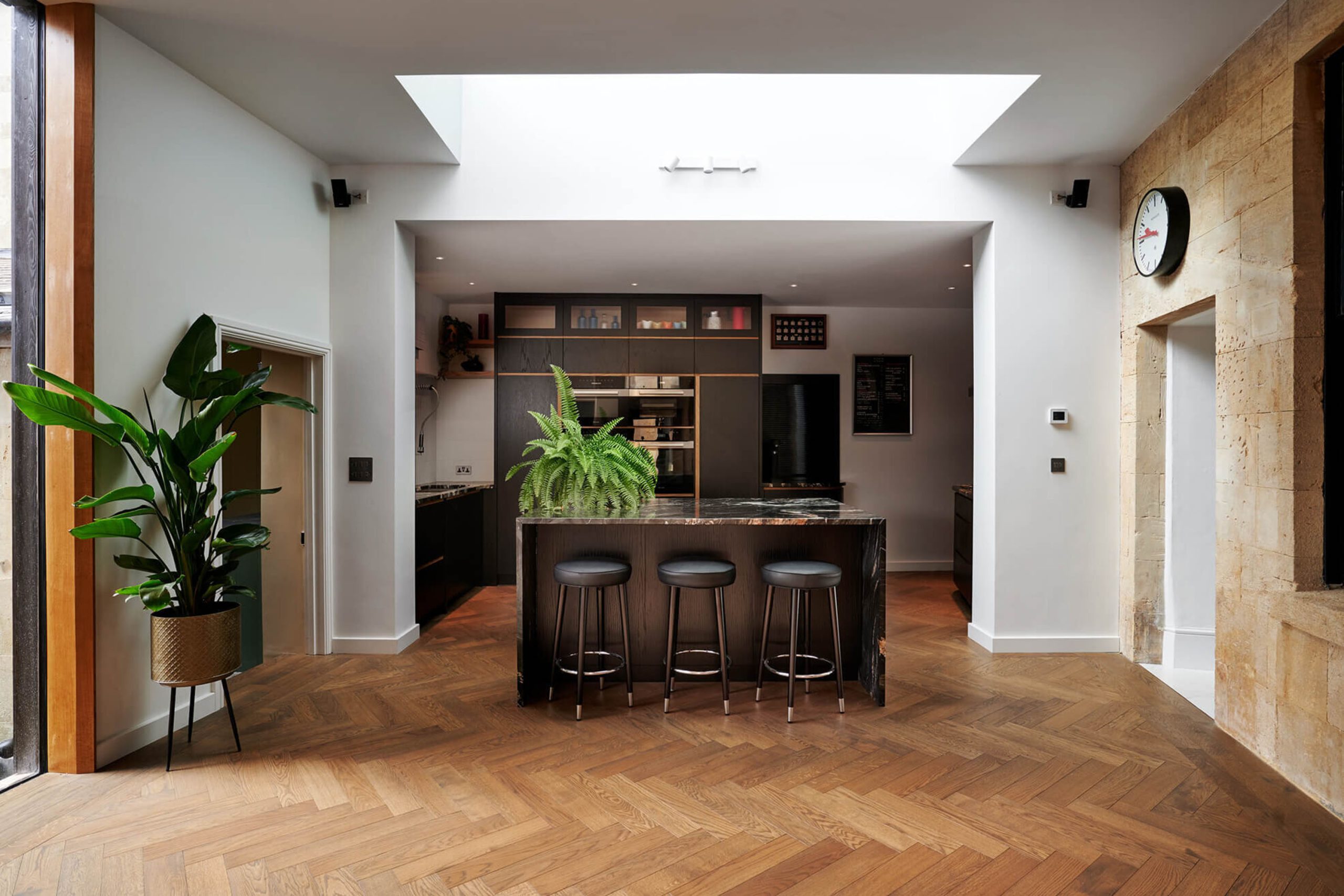
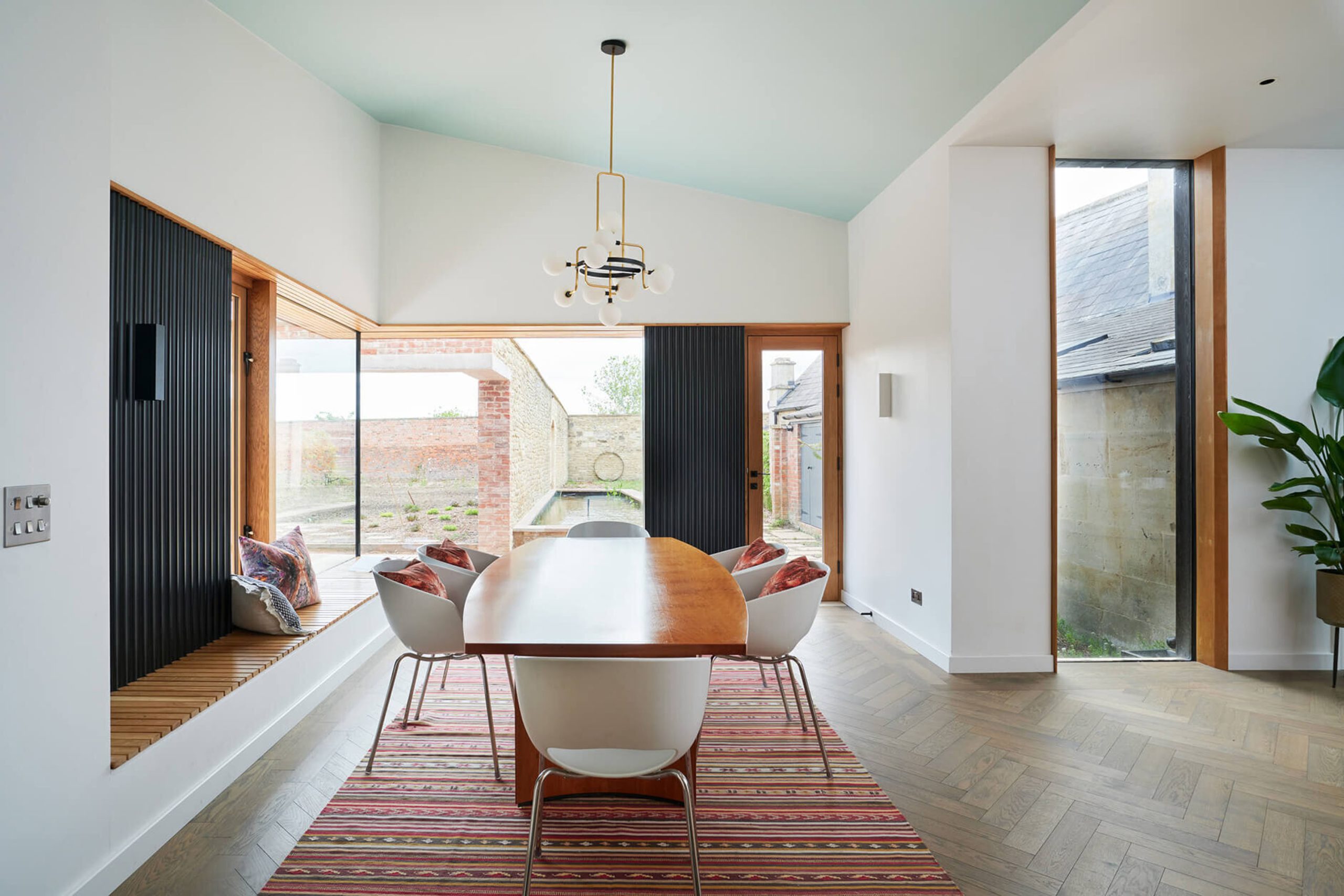
The extension’s glazing is frameless, floor-to-ceiling, and strikingly dramatic. Oak detailing above the windows and doors ties seamlessly to the kitchen’s interior, while the asymmetric roofline subtly echoes the historic profiles of the surrounding structures.
Perhaps the most transformative gesture was in the garden. The once-enclosed walled kitchen garden, no longer needed for its original purpose, had become a barrier between the house and the wider grounds. By creating an opening in the wall, the house and garden were reconnected. The new aperture mirrors the contemporary language of the extension, while the reimagined walled garden has been reborn as a tranquil pleasure garden—a space where history and modernity coexist harmoniously.
Date:
2019